Organize the operation
Group the camera views and select relevant operations, from weighing and filling to machine interaction and observed recovery.
Explore how industrial activities become multi-view demonstrations, labeled action sequences and inspectable data files.
Head-mounted, external and wrist views capture different perspectives of hand–object interactions and the surrounding workspace.
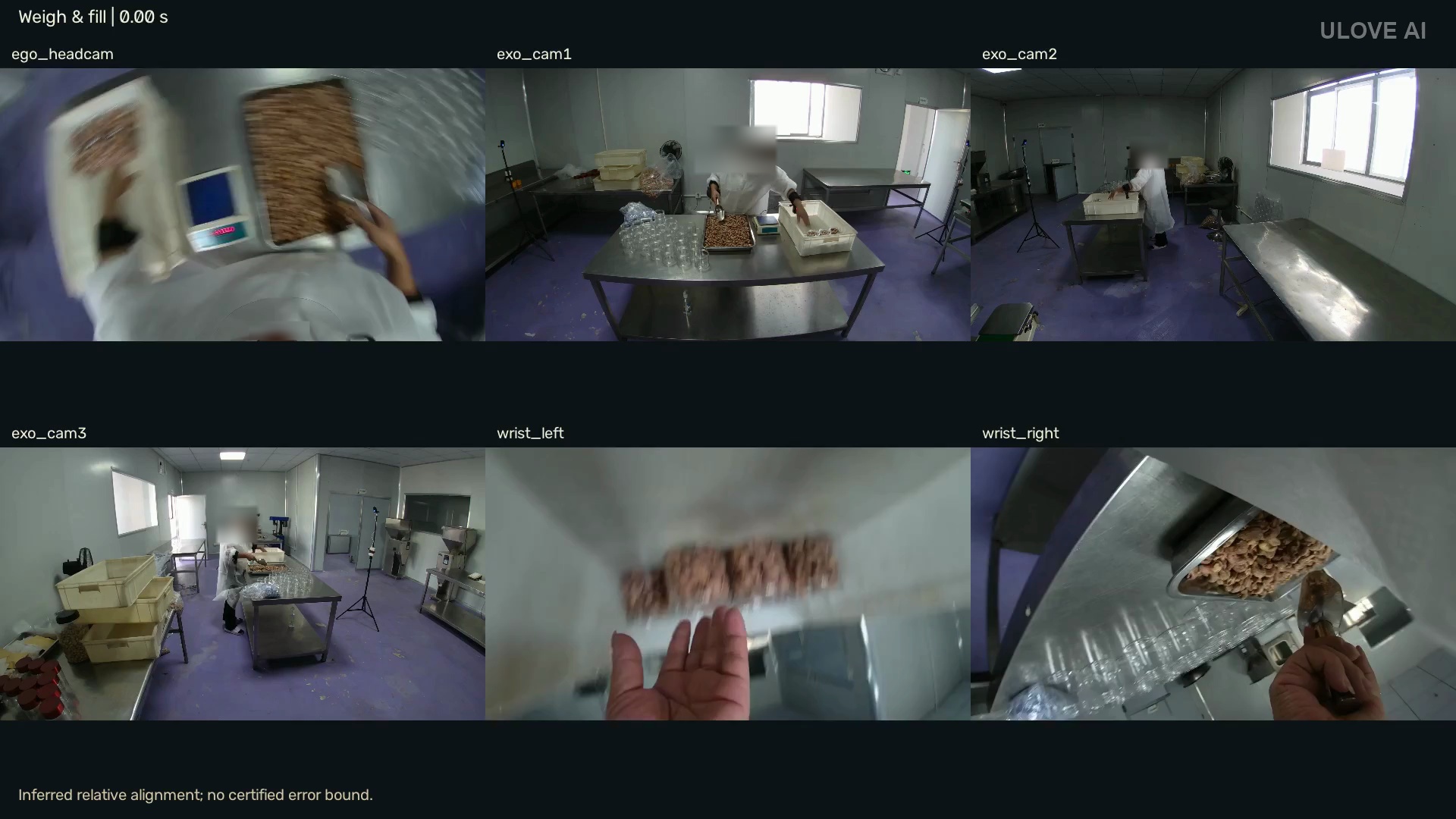
Our current sample connects video with action labels and source references, giving your team a concrete starting point for evaluation.
Group the camera views and select relevant operations, from weighing and filling to machine interaction and observed recovery.
Describe visible action phases and provide available 2D hand estimates. Visibility and uncertainty are represented in the annotation data.
Review video and annotation correspondence, follow source-frame mappings and check exported file structure and integrity.
Review the sample against your intended use before defining a larger collection.
Detailed annotation coverage, point provenance and sample review records are available for technical evaluation. These describe the current sample and help establish acceptance criteria for your project.
A small pilot can establish whether a capture setup supports the buyer’s intended use.
3D pose, calibrated geometry and hardware synchronization require separate validation.